



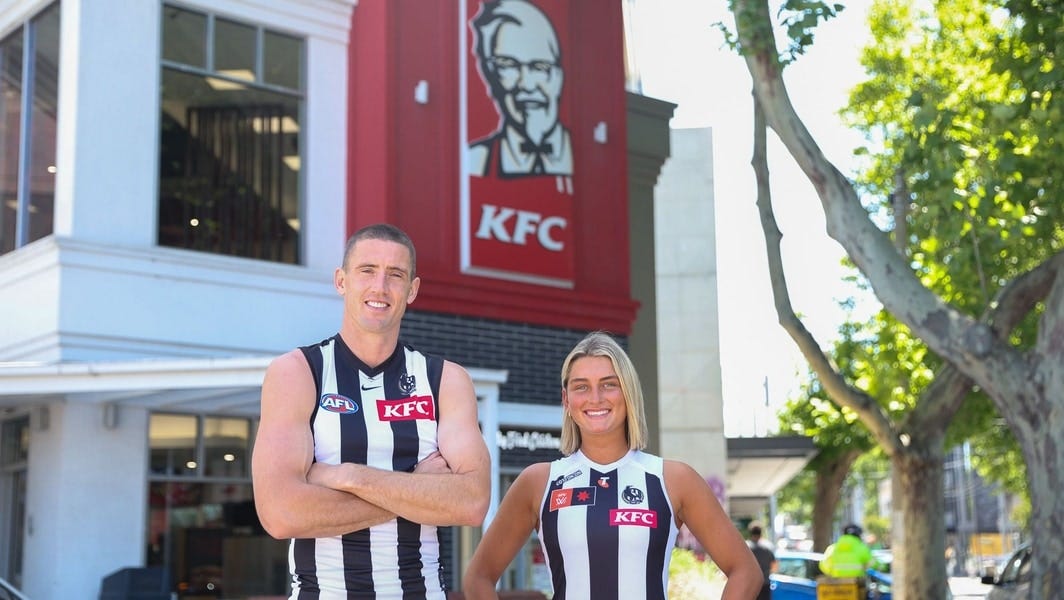
Collingwood FC and KFC extended their partnership across the Club’s AFL and AFLW programs for a further 5 years
Essendon FC announced a new partnership with AutoGrab which will see AutoGrab’s branding featured across Essendon’s training and warm-up balls, along with match-day signage and digital integration - AutoGrab will also become a Premium Business Member of the EFC Network
Western Bulldogs welcomed BSc as the Club’s Official Sports Nutrition Supplement Partner - it will supply sports nutrition supplements to both the AFL and AFLW programs for the next 2 seasons
West Coast Eagles confirmed Elastroplast resigned as its Official Tape Supplier for the 2026 AFL season
Manly Warringah Sea Eagles secured a new partnership with Flip Insurance which will provide insurance policies for all Sea Eagles Pathways players
Perth Bears announced McDonald’s as its newest Major Partner under a 3-year deal that will also see the Ronald McDonald House Charities become the Official Charity Partner of the NRL’s newest franchise
Queensland Rugby League welcomed National Storage as an Official Partner for the 2026 to 2028 seasons - National Storage will become the Presenting Partner of QPlus subscriptions, giving fans enhanced access to exclusive content and experiences across the game
Under Armour extended its partnership with Sydney FC for 3 more years, reaffirming its position as the Official Premium Partner, Apparel Supplier and Footwear Partner across all Sydney FC teams, including the A-League Men, A-League Women and the full boys’ and girls’ Academy pathway
Adelaide United announced SA not-for-profit health fund, Health Partners, as an Official Silver Partner for the remainder of the 2025/26 season
NBL announced a new partnership with hospitality loyalty program, The Pass, which will give NBL+ members exclusive access to special deals and perks at more than 200 iconic bars, restaurants, pubs and event spaces nationwide through The Pass app
NBA teamed up with Gillette in Australia which will see the release of bespoke NBA-branded Gillette grooming packs, alongside a retail promotion offering fans the chance to win tickets to the NBA Playoffs in the U.S
LIV Golf announced Rolex as an Official Partner - The partnership will focus on delivering an exclusive and elevated hospitality programme for the Swiss watchmaker’s guests
Asian Football Confederation announced McDonald’s as an Official Regional Partner of the AFC Women’s Asian Cup Australia 2026™
World Rugby announced LIQUI MOLY as the Official Motor Lubricants Partner of Men’s Rugby World Cup 2027 and Women’s Rugby World Cup 2029, both to be hosted in Australia
Bunnings and QSport launched a strategic partnership that aims to “add value and boost commercial support for more than 70 member state sporting organisations”
Hahn entered into a new partnership with Ripper GC, becoming an official sponsor of one of golf’s most electric teams, led by Captain Cameron Smith
AFL announced a new 4-year partnership with Vinarchy, which became the Official Wine Partner of the AFL, AFLW and Marvel Stadium
The match schedule and ticket prices for Men’s Rugby World Cup Australia 2027 were revealed - To mark the moment, former Wallaby captain John Eales together with Australia's Joseph Suaalii took the Webb Ellis Cup to the top of the Sydney Harbour Bridge, alongside 24 young people from local rugby communities representing the 24 teams involved in the tournament
Carlton FC captain and Brownlow Medalist, Patrick Cripps, launched a new start up, ALIVIA, which “delivers premium, science-backed supplements designed for strength, recovery, balance and longevity”
Australian Open 2026 delivered new all-time attendance highs, with 1,150,044 fans through the gates for the main draw, breaking the previous record set last year of 1,102,303
WNBL reported that Han Xu has helped drive a 60% growth in Perth Lynx club memberships since arriving at the club, and that her jerseys account for 33% of all club jersey sales - At a league-wide level, Xu’s arrival has helped drive a remarkable 53% YoY increase in attendance
The Governor-General of the Commonwealth of Australia, Her Excellency Sam Mostyn, hosted a Women in Sport & Business Leadership Celebration at Admiralty House marking one month to go until the kick-off of the AFC Women’s Asian Cup Australia 2026™
Optus Stadium announced that it’ll serve full-strength beer to footy fans - available from round 2 of the regular AFL season
Seattle Seahawks hosted an NFC Championship watch party at Sydney’s The Golden Sheaf Hotel
Guest Writer: Oliver Trenchard
Today we’re welcoming back Ollie Trenchard, Growth Director at Engage Digital Partners, as this week’s guest writer!

Ollie is passionate about engaging new and local audiences, having spent a decade working across different continents in the sports industry with rights-holders, sponsors and broadcasters on fan engagement strategies. He currently is Growth Director at Engage Digital Partners, where he leads clients’ growth and fan engagement strategies across the APAC region.
In today’s article, Ollie unveils which teams in Australia and New Zealand have the most loyal fan bases.
Enjoy the read!
Which sports team in Australia and New Zealand has the most loyal fans?
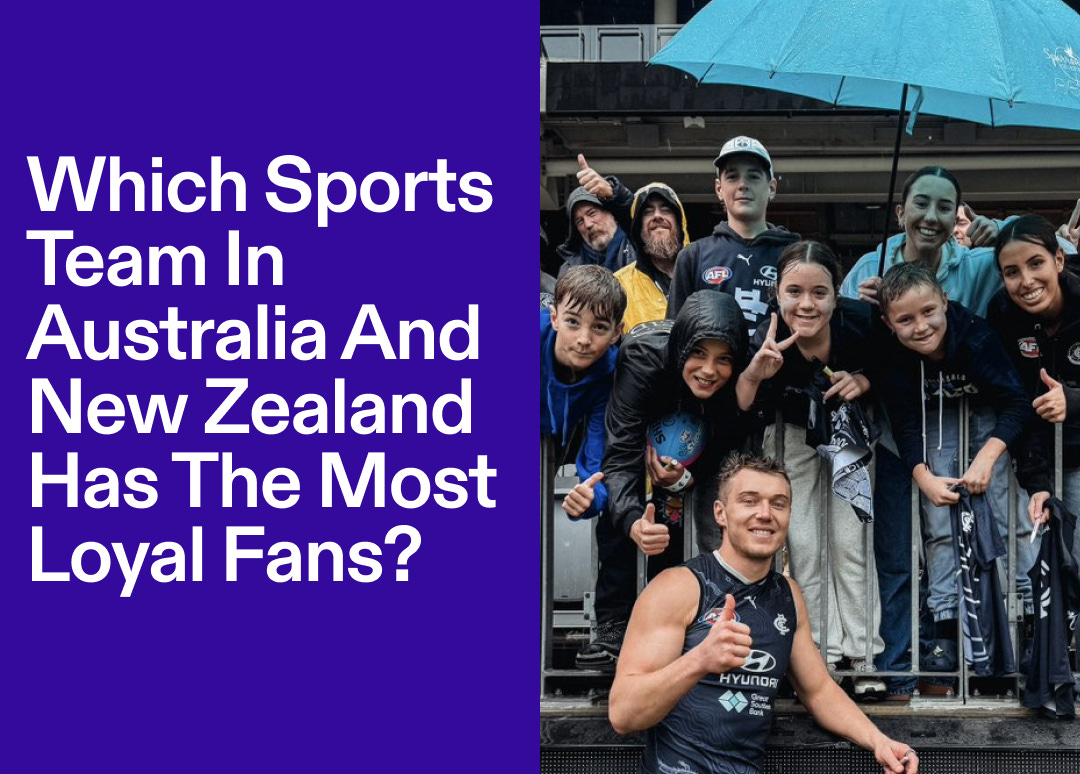
Winning builds attention. Losing tests devotion. Somewhere in the space between those two ideas sits the true measure of a sporting fanbase.
For decades, clubs across Australia and New Zealand have claimed the loudest supporters, the most passionate members, the most loyal faithful.
Those claims are usually backed by attendance figures, membership totals, TV ratings or a highlight reel of finals appearances. Each of those metrics captures a slice of the truth. None of them isolate loyalty in a way that accounts for context, competition and performance cycles.
The Loyal Fans Index, developed by fan engagement specialists Engage Digital Partners, is an attempt to do exactly that. It is the first index of its kind across Australia and New Zealand men’s sport, built to measure not just how big a fanbase is, but how it behaves relative to its environment.
The model blends attendance strength, social engagement, on-field success, competition context and market pressure into a single ranking designed to answer one question:
Which clubs are supported by communities that keep choosing them, even when the conditions are not ideal?
The answers are flattering for some teams, confronting for others, and revealing for the entire sporting landscape.
How it all works
The framework behind the Loyal Fans Index is built around relative performance rather than raw scale.
A 15,000 average crowd means something very different in the AFL compared to the A-League or Super Netball.
Digital engagement in cricket sits inside a different ecosystem to NRL in terms of the global audiences reached. The index corrects for those realities.
Teams across the men’s competitions of AFL, NRL, NBL, BBL, Super Rugby Pacific, A-League, in addition to Suncorp Super Netball were benchmarked for this initial index - with deeper dives into women’s fandom on the horizon.
Attendance is measured both in terms of pure numbers in addition to as an index inside each competition. A team is assessed based on how strongly it performs compared to its peers, not just a universal benchmark. This prevents major leagues from swallowing the ranking simply through size. A SSN or NBL team that dominates its own environment earns credit for that dominance.
The same logic applies to social engagement. Activity across Instagram, TikTok and YouTube is measured through engagement behaviour, not just follower counts. Commenting, sharing, watching and interacting carry more weight than passive subscription. Again, teams are judged both in sheer numbers and in relative to their competition.
On-field success is included as context. Recent win rates, finals appearances and historical achievements over the past decade are factored into the model, but success is not treated as a reward in this ranking. Instead, it acts as a lens through which fan behaviour is interpreted. A fanbase that maintains high engagement during a poor season is telling a stronger loyalty story than one that spikes only when silverware is available.
Competition adjustments recognise that not all leagues receive equal media oxygen. Teams operating in codes with less mainstream exposure (e.g. SSN, Super Rugby Pacific) receive additional credit when they generate meaningful engagement. There is also a city leveller that accounts for crowded sporting markets. Clubs fighting for attention in multi-team cities with an abundance of options for casual fans are operating in a harsher environment than one-team towns.
The result is a ranking that values effort. It highlights supporters who choose to show up rather than simply drifting toward whoever is winning.
Interpreting the index
The Loyal Fans Index reframes how loyalty is discussed in Australian and New Zealand men’s sport. It shifts the conversation away from trophy cabinets and toward behavioural patterns. Attendance habits, digital engagement, cultural embedding and resilience during downturns become the central metrics.
The teams at the top are not simply the biggest brands. They carry their teams through losing seasons and amplify them during winning ones.
In an era where sporting attention is fragmented across streaming platforms, global leagues and constant digital distraction, that kind of loyalty is becoming rarer and more valuable. It represents a relationship that cannot be bought through marketing alone. It has to be built over time.
This index does not deliver a final verdict on which fans are ‘best.’ It offers a structured way to examine how devotion manifests across different environments. It invites debate, which is part of its purpose.
Supporters will argue their club deserves to be higher. That argument itself is evidence of attachment.
The clubs that rank highly here are supported by people who keep choosing them, week after week, year after year, regardless of the scoreboard.
The TOP 10
What the top of the table reveals
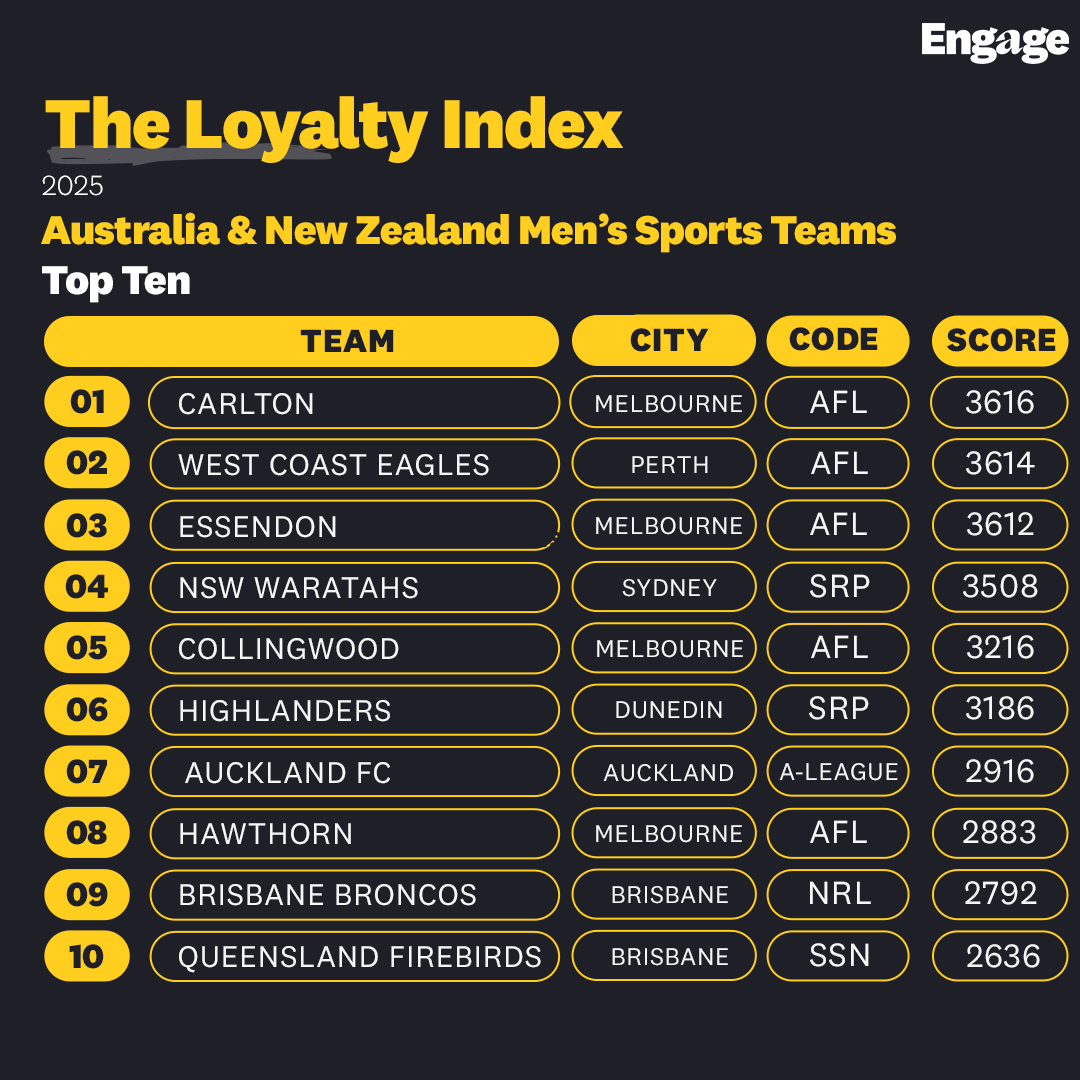
The first thing that stands out in the top 10 is variety. AFL giants sit alongside rugby union traditionalists, an emerging A-League presence. one of the NRL’s largest clubs and a Super Netball franchise. There is no single blueprint for loyalty. There are multiple pathways that lead to it.
Three AFL teams make up the top three, all enduring pretty miserable on-field campaigns in 2025 but their fanbase have continued to turn up in the stands and digitally.
Carlton and Essendon in the top three reinforces the power of legacy.
The Blues draw one of the strongest average crowds in the AFL and remain a constant talking point in football conversation - for right or wrong reasons. Their recent success on the pitch has been mixed but has not diluted fans’ match-going habits.
Essendon landing just behind Carlton strengthens the same theme. Few clubs generate as much discussion, debate and emotional investment. Essendon supporters still show up in large numbers on the whole and maintain incredible digital engagement, especially on platforms such as TikTok where they have developed a content output that does not hinge on on-field success.
West Coast’s position between the Blues and Bombers might be the purest loyalty signal in the entire dataset.
A brutal season (again) on the field did not produce a collapse in attendance. Perth remains one of the most reliable matchday markets in the country, and West Coast supporters treated a poor year as something to endure together rather than abandon.
Super Rugby Pacific operates in a somewhat fragmented media landscape between Australia & New Zealand and has seen years of structural change in formats. Yet the Waratahs continue to command a matchday presence that ranks at the top of their SRP, paired with a social footprint that holds its ground despite patchy on-field results.
Their 2025 season was far from a success story - coming into the campaign off the back of a wooden spoon 2024 - but their supporters behaved as though the jersey still carries institutional weight, aided by the arrival of Joseph Aukuso-Suaalii and some tight wins in front of their home faithful at Allianz Stadium.
In a city as crowded as Sydney - with no fewer than 20 professional sports teams - that matters. The ranking suggests the Waratahs are supported by a base that views the club as identity when it comes to rugby union in NSW, not entertainment.
Collingwood round out the top five to highlight the strength of the Magpie Army even when on-field success is accounted for in this index.
They have the highest success index (2025 and recent historical results) of any team in the top 40 in this index, meaning it would take some incredible fan engagement to get anywhere near the top 10 in the loyalty index.
However, they top matchday attendance across the AFL and sit near the top of social engagement rankings. Love them or loathe them; the Magpie Army do not watch passively.
The Highlanders’ appearance inside the top six is a reminder that loyalty does not require a mega-market. Dunedin is a smaller environment, yet the club pulls impressive relative crowds thanks in part to being a strong university town. The Landers maintain an active online presence despite a challenging on-field record in 2025.
Auckland FC’s rapid ascent inside the top 10 signals the emergence of a new football community. Strong crowds and a high social engagement ranking in a lower-coverage league suggest the club has connected quickly with its audience.
Hawthorn’s ranking is powered by a remarkable digital presence. They hold the strongest social engagement profile in the dataset, paired with healthy attendance fuelled by a new wave of fandom.
Similar to Collingwood, Brisbane Broncos’ inclusion in the top 10 highlights the sheer fandom of the 2025 NRL Premiers. Even when on-field success and the weight of the NRL competition is accounted for, their digital engagement and match attendance at Suncorp is too strong to keep them out of the top 10.
Suncorp Super Netball also sees a franchise make the top 10 in the form of Queensland Firebirds, making Brisbane the only other city alongside Melbourne to see more than one team feature in the top 10.
Competition patterns
AFL clubs form the backbone of the ranking, which reflects their structural dominance in the Australian sports economy, particularly evident through a state-level with 4 x Melbourne-based teams making the top 10 with mammoth home crowds at the MCG a significant factor.
Large media coverage, historical reach and embedded membership cultures provide a strong foundation. However, the index adjustments prevent those codes from monopolising the narrative.
Super Rugby Pacific teams that appear high in the table are doing so through effort and limited resource. They operate with less mainstream exposure than the likes of AFL and NRL, yet still generate meaningful engagement - signalling fanbases driven by legacy.
A-League representation inside the top tier is noteworthy, with football in Australia and New Zealand existing inside a volatile media environment. Auckland FC’s inclusion comes at a slight caveat being their first season in the competition, yet leading the way in the competition from a match attendance and digital engagement perspective.
Overall, five different codes are represented in the top 10 in addition to six separate cities.
Across competitions, the index suggests that media scale influences awareness, but not necessarily devotion. Smaller ecosystems often produce supporters who operate with higher intentionality. They choose their club. They sustain it.
Cities as loyalty laboratories
City context plays a quiet but powerful role in the ranking.
Melbourne dominates the top 25 by sheer volume of clubs, yet the internal spread is wide. The city contains mega-brands, mid-sized institutions and smaller teams with fiercely protective communities. Melbourne’s sporting culture encourages tribalism. Multiple teams coexist inside a dense ecosystem, forcing supporters to define themselves through allegiance.
Sydney is a different battleground. The city’s sporting menu is fragmented across rugby league, union, cricket and football, with constant competition from entertainment alternatives. Teams that perform well in the index out of Sydney are winning a harder attention fight. The Waratahs and Bulldogs ranking near the top highlights how intentional fandom becomes in crowded markets.
Perth operates with concentration. Fewer major teams share the spotlight, but matchday reliability is extremely high. West Coast’s placement demonstrates how a city can rally around a flagship property even during lean years.
Auckland sits in an intriguing middle ground. When a team captures momentum, engagement spikes quickly. The presence of Auckland FC high in the ranking suggests the city is capable of forming new sporting identities at speed when the product resonates.
Then there are the one-team cities: Dunedin, Cairns and Christchurch being the key call-outs, where home support is embedded into the fabric of the town or city.
Social engagement leaders
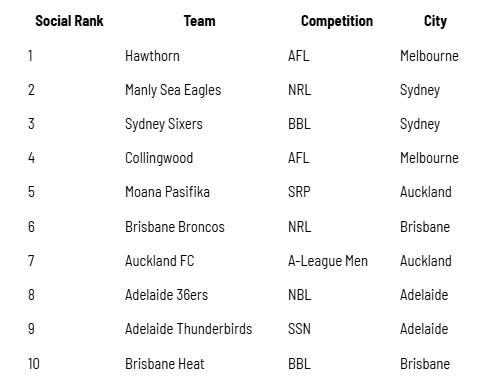
The social engagement rankings reveal which fanbases treat online spaces as extensions of the terrace.
Hawthorn sits at the top of that list. Their unique content output across vertical formats especially has become the envy of many content teams as they engage new generations of casual footy fans.
Manly Sea Eagles have enjoyed an incredible 2025, powered by several ‘viral’ player-led outputs that have resonated not only on TikTok, but across other platforms such as Instagram and YouTube Shorts.
Auckland FC’s debut A-League campaign coincided with a minor Premiership (coupled with light-hearted engagement around Auckland City’s FIFA Club World Cup appearance in July), while the Broncos’ rollercoaster season delivered headline moments until their trophy lift in mid-October.
Moana Pasifika’s presence in the list below is also particularly significant. Their digital engagement suggests a community-driven identity that transcends win-loss cycles. Cultural connection fuels participation.
Sydney Sixers and Brisbane Heat both rank near the top, driven by big marquee signings for the 2025-26 season.
Adelaide’s basketball and netball teams also rate strongly. Their supporters operate inside tighter ecosystems, which often encourages deeper involvement. Smaller communities can produce louder relative voices.
Mini ladder: Social engagement leaders
Success and the loyalty paradox
One of the most provocative aspects of the Loyal Fans Index is how it treats dynasties.
Several teams with extraordinary recent success sit surprisingly low. That does not mean their supporters lack passion. It suggests their engagement is more closely tied to on-pitch performance cycles.
Teams such as Melbourne City (A-League), Penrith Panthers (NRL) and Brisbane Lions (AFL) have enjoyed considerable on-field success in recent years. However, the level of engagement from a social perspective compared to their competition benchmarks does not reflect that success.
Clubs like West Coast and Essendon score highly because of their supporters’ maintained presence during poor seasons. That behaviour carries more weight than success spikes.
Conversely, strong winners who also rank highly show something impressive.
The Broncos are a good example. A chaotic season featuring downturns in form, comebacks galore and eventual premiership created a perfect storm of emotion - add in Reece Walsh drinking toilet water and you’ve inadvertently got fan engagement for years. Their supporters stayed loud throughout and were rewarded with an outpouring of engagement in October.
The ranking raises a difficult question for successful teams:How much of your support is structural, and how much is transactional?
The AU-NZ sports fandom is splitting into two fandom styles.
One group treats sport like content. They appear when it is trending and drift when it cools.
The other group treats sport like identity and defend it online and in the stands. They attend through losing season upon season. They inherit it and pass it on to their thankless children to endure the same.

A-Leagues - Consumer Growth Executive
AFC Women’s Asian Cup 2026 LOC - Marketing Consultant – Community and Engagement
AFL - Data Insights Lead
AFL - National Schools Lead
Australian Grand Prix Corporation - Senior Membership Manager
Australian Sports Commission - Senior Event Manager
Auto & General - Sponsorship Manager
Athletikan - Co-Founder
Basketball Victoria - Digital Product Manager
Bastion - Managing Director - Experience
Bastion - Senior Client Manager
Bastion - Strategic Partnerships Director
Bastion - Senior Strategy Manager
Betfair Australia - Campaign Specialist
Brand Collective - Marketing Coordinator - Reebok & Superdry
Brisbane Bullets - Corporate Partnerships Manager
Champion Data - Commercial Manager
Cricket Victoria - Media & Communications Manager
ClassPass - Field Account Executive - Brisbane
Cronulla Sharks - Head of Brand & Creative
Easygo - Senior Product Designer - Sportsbook
Easygo - Sponsorship Marketing Coordinator
Endeavor - Agent
EnergyAustralia - Sponsorship Lead
Entain Australia & New Zealand - Digital Media Coordinator
Entain Australia & New Zealand - Event Specialist
Entain Australia & New Zealand - Senior Creative Designer
Front Runner - Senior Performance Marketing Manager | DTC Growth
Gemba - Mid-Weight Creative
Golf Australia - Executive Director - Australian Golf Foundation
Hawthorn FC - Corporate Development Executive
Hawthorn FC - Digital Sales & Integration Lead
Hawthorn FC - Senior Events Manager
KOJO - Sports Presentation Producer
lululemon - Manager, Brand Operations (12 Months Contract)
Maurice Blackburn Lawyers - Sponsorship and Campaigns Lead
Melbourne FC - Media Coordinator (Mat-Leave Cover)
MKTG Sports + Entertainment - Account Director - Sponsorships & Consulting
MKTG Sports + Entertainment - Research Manager
Netball NSW - Social Media Manager - NSW Swifts
Netball Victoria - Community Growth Lead
Netball Queensland - General Manager - Nissan Arena
Netball Queensland - Senior Partnerships Coordinator
News Corp Australia - Sports Reporter
News Corp Australia - Digital Product Manager Sport
Nike - Director of Stores, Pacific
Nike - Lead, Account Marketing Sporting Goods/Sport Specialty Pacific
Nike - Lead, Integrated Media
Nike - Senior Professional, Stores & Partner Marketing Pacific - Jordan APLA
Nine - Sales Executive - Sport
Octagon - Senior Analyst
Parramatta Eels - Consumer & Events Executive
Picklebet - Affiliate Marketing Executive
Picklebet - Brand & Campaign Manager
Picklebet - CRM Campaign Lead
Pixellot - Regional Commercial Partnerships Manager
Rugby Australia - Development & Engagement Coordinator, Australian Rugby Foundation
Rugby Australia - Strategy Manager
Softball Australia - Marketing and Communications Manager
St Kilda FC - Marketing Coordinator
Sportsbet - Insights Analyst
Sportsbet - Senior Strategy Manager
Sports Entertainment Network - Campaign Implementation Manager - Maternity Leave Contract
Sports Entertainment Network - Commercial Manager - Ballpark
Sports Entertainment Network - Events & Administration Manager
St Kilda FC - Graphic Designer
Sweat - Social Media Manager
Tabcorp - Rewards Program Manager
Tasmania FC - Creative Coordinator
Tasmania FC - Media And Communications Manager
TGI Sport - Design Lead
TGI Sport - Senior Retail Manager
Touch Football Australia - Digital Services Coordinator
Touch Football Australia - General Manager - Operations
Touch Football Australia - Growth Manager - Victoria
Two Circles - Consultant
Victoria Racing Club - Precinct Operations Coordinator
Volleyball Queensland - Marketing Manager
Western Bulldogs - Head of Consumer
Wilson - Territory Manager
Not a subscriber yet? Discover specialised sports marketing insights, tailored for sports industry professionals within Australia and across the globe. If you work in sports for an agency, brand or rights-holder then this is for you.